We are living in times where AI is more and more a thing and almost every studio is using it in one way or another – the question is in which way it is used, communicated and if this is done fair and transparently. We do think that it is generally not an issue to use it if it makes the creation better and is just used as a tool on the way instead of being the creator itself. For everyone who does use it, there are usually reasons to do so. Some reasons or intentions are based on good and understandable arguments, but some we have noticed out there are also very doubtful. In any case and for sure it becomes an issue, as soon as another artist’s work is touched without permission or if the use of AI is not disclosed properly or even knowingly used in a deceptive way.
We have decided to be as transparent as possible when it comes to AI and not leave you alone with one or two general and unclear phrases dropped below a project.
What are the reasons for using it and what is our view on AI? – An honest and critical discussion from the perspective of a tiny studio facing reality
We can’t even say that we are a small studio – no, indeed we are a tiny studio. And tiny studios have very limited resources in different dimensions like for example time, funds to invest and hands to work. On one hand we have tons of ideas, but on the other hand also a huge set of simultaneous tasks and very limited capacity to care about all of them – Still, things have to be done. Most don’t know, how much such a studio has to lift. And the weight becomes heavier, the less hands you have. As we are creating TTRPG game worlds in different media like printable terrain & miniatures, source books, adventures and even have our own game world, you can imagine how our workload might look like. Our activities include idea creation, recherche, sculpting, pre-supporting, 3d printing, physical painting, photography, photo editing, concept work, writing, illustration, test playing, correction, file preparation and export, freelancer coordination (in some cases), Kickstarter handling, delivery, marketing, business direction and development, online-shop administration, accounting, finance reporting, balancing, VAT declaration, income tax and social insurance declaration and much more – We bet we forgot a lot to list here. Our working week indeed has 7 days and we need a huge skill-set to get all of this done in the way we are doing it. It is not a simple thing to manage.
The reason for using AI is always about limited resources. In our case time and funds and also imperfect skills when it comes to language for example. Having read about our set of daily tasks and activities above, you can imagine that it would be overwhelming to inflate those tasks that come with a huge weight from the beginning on already. Illustration is a good example – as much as we love doing that by ourselves. But it would need an incredible amount of extra time to do all the illustration work by hand. We do not have enough resources in terms of time. And when thinking about outsourcing or employing instead, unfortunately it would need an enormous amount of extra funds to get one of our source books fully illustrated in the way we would like to have it. But we simply do not have the initial funds to get that commissioned and the income created in average by one of these books is only sufficient to cover small parts of the costs for the illustration work which would be necessary to be done. There are creators out there who will tell you that they use AI art for „this one project only to generate enough funds for the next one being fully hand-illustrated“. We have read that and some other „very creative“ stories to explain the use of AI art. From our point of view this is deceptive and not very honest – in best case just naive. For a tiny studio it is not working this way. You will need a much larger financial background far beyond what tiny studios are able to generate organically. So a tiny studio will either have to step into a huge financial risk, huge dependencies or having had a lucky hardcore Blockbuster before, in case they want to have bigger volumes fully hand-illustrated. So lets stay transparent and honest. The unromantic truth for our studio is, that as much as we love what we are doing here, like everyone else we need to pay our bills and taxes and there must be something left for doing so after a project. Even the public numbers which you can see are not final. Credits cards are not covered – crowdfunders and especially marketplaces take very high commissions. And this is why careful choices have to be done. Everything else is just adventurous storytelling.
For 20 years we tried to bring our game world „Infinia“ and our Dungeon Crawler „Imaginary“ to life, but the illustration process, as well as the costs for proper translation were impossible to lift. AI image creation and translation were the only reason why we were able to start doing that without having to carry a huge financial risk. We could have used random stock art or completely let the art part go and only present text. But this is not the way we wanted to do it, so we decided against it. We want to have our creations individual, immersive, cinematic, richly illustrated with strong colors and have exact scenes and pictures in our mind how our world looks like. For this reason it can’t be reflected by random stock art. There are creators out there who will advertise their work with descriptions like „a fine selection of carefully curated stunning top-notch stock-art“. That is great after bringing the wording back to reality – But it is just not our way. From our point of view it is great to have it handmade here, but the stock-art is also very likely not that related to the individual theme or story of the creation, which would end up in non-immersion for our feeling. In the end it is a matter of what is important for you personally and individuality and immersion is for us.
Also, we are no English natives, so AI is very helpful to improve our writing in English. A correction and/or translation service is impossible to finance for a tiny studio, unfortunately like individual handmade art, maybe even more expensive. So we had to take a decision. Let go of our visions which are crucial for our approach of doing things and what we want to achieve or accept help from AI instead. Finally we decided for option number two.
AI is a help for us to do things according to our vision and to guarantee an improved English writing, which is both crucial for us. It helps us to stay within an acceptable financial risk range while being able to realize what we want to do in the way we want to do it and as a side effect it also speedens up the process a little.
We personally see a red line where „artists“ ask AI to create ideas for them or even begin to use other artists work in a targeted way. Inspiration is okay, artists were always inspired by other artists work. Intentionally using material for recreation is a clear infringement and out of the question. We have original ideas for ourselves, an own world behind and also own stories coming from our minds. We don’t ask AI to have these created for us. For us the question is more about how to get things done/published in the style and approach that we have in our mind while staying within our funding range, rather than how to get things imagined/created.
Having a look into our workflow and examples of how we use AI
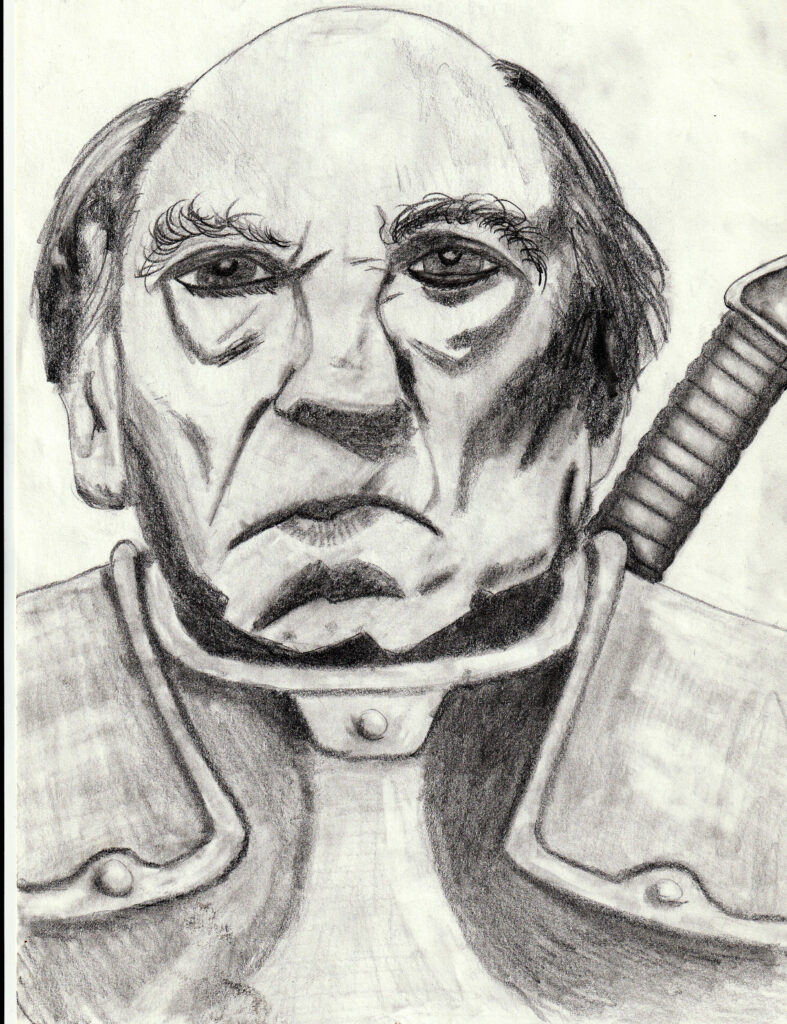
We already talked about image and illustration creation, where AI is a very helpful tool. In many cases we use our own sketches or paintings as initial input to create a set of illustrations. Here is an example from „The City of New Burgh“. First we sketched King Hamilton and scanned him in.
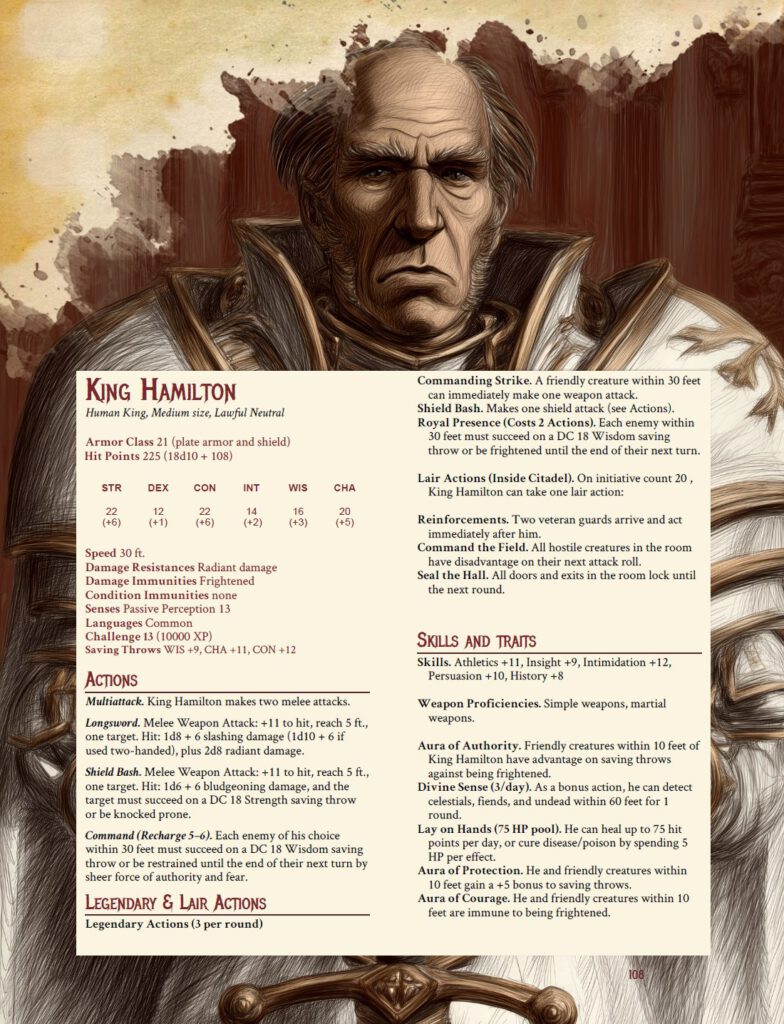
Then using AI to create a set of images which might fit the final book. After overworking it in our photo editing software we were able to achieve this result for our publication.
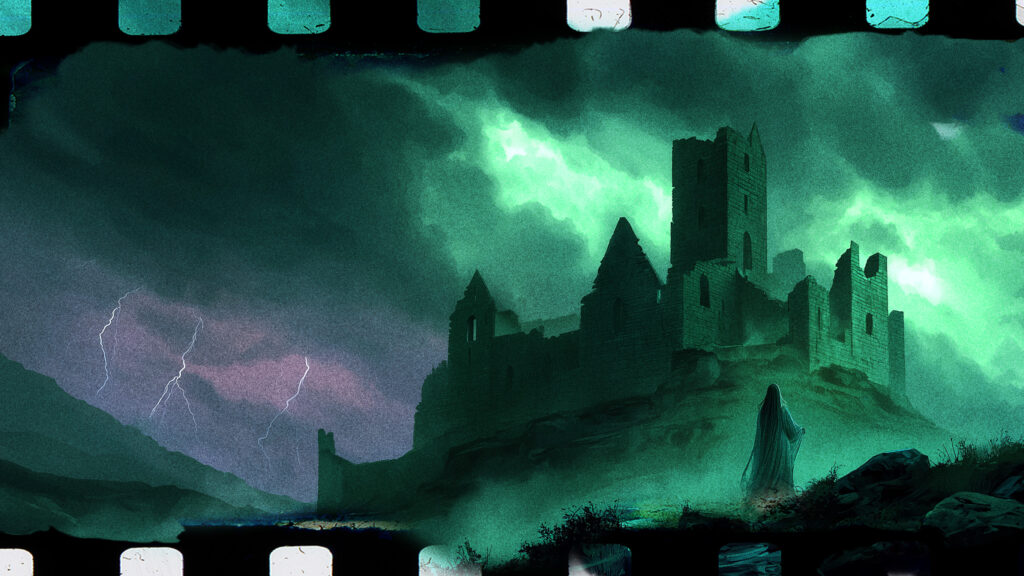
In many cases we use photography from our own frequently made inspiration and architectural study travels. Here is a good example of a picture we did in Ireland at the Rock of Cashel back in 2009.
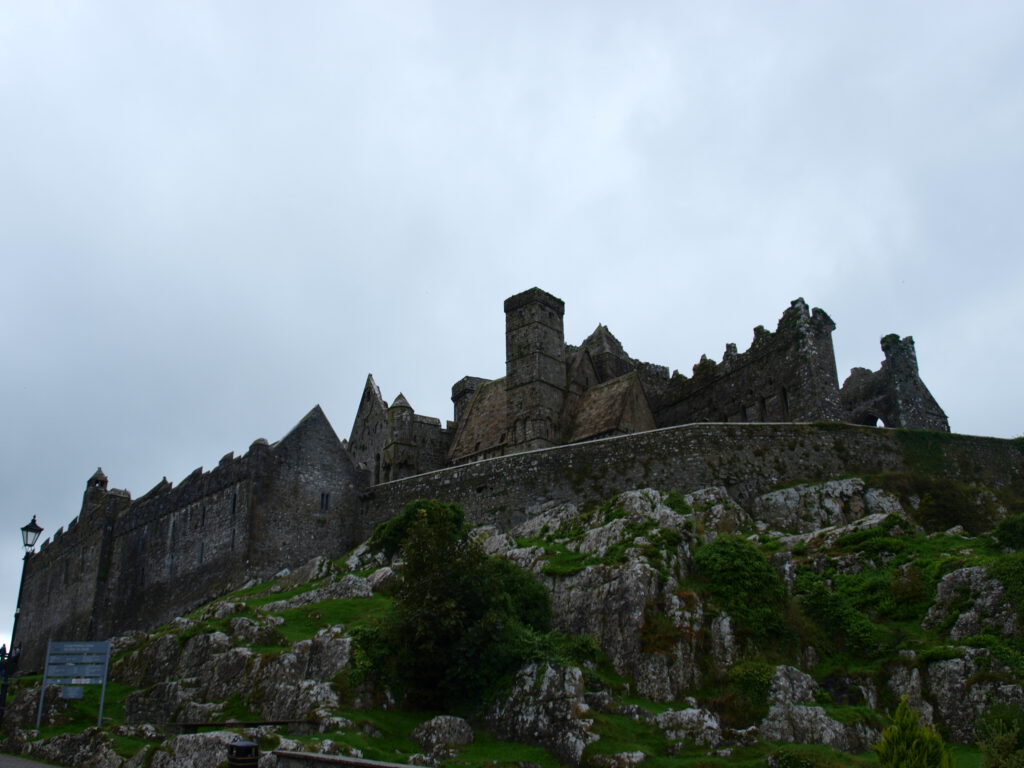
It has been used to create a set of illustrations for „The Curse of Kilminster Rock“, playing on Shirley Island, which has been strongly inspired by this Ireland round trip.
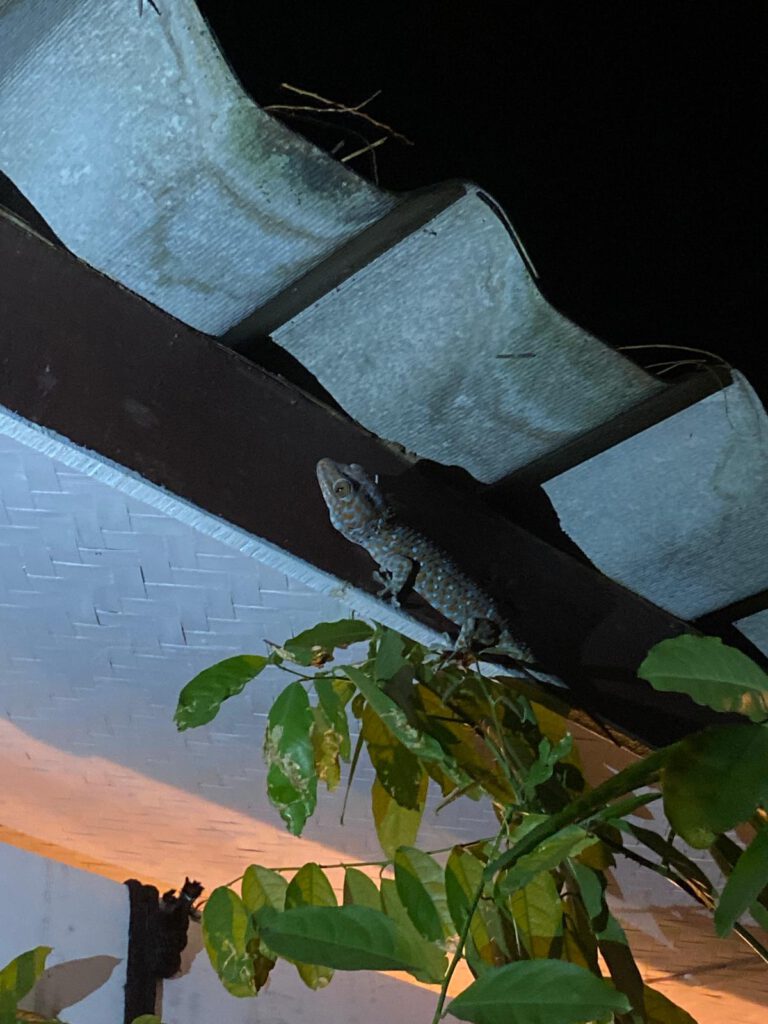
Also animals are a good sample. Many of the characters from our Wicked Companions series have been created on the base of pictures we took in South East Asia where we live parts of the year. The character „Nuts“ for example is based on a Tokee gecko which was usually sticking to our bungalow in the evening on Koh Phangan. Fun fact: We called him „Nuts“ not only because it means „crazy“. We had his poo on our terrace in the morning which usually looked like a mixture of barely digested berries and „nuts“. No idea what he ate the day before. Bon appétit.
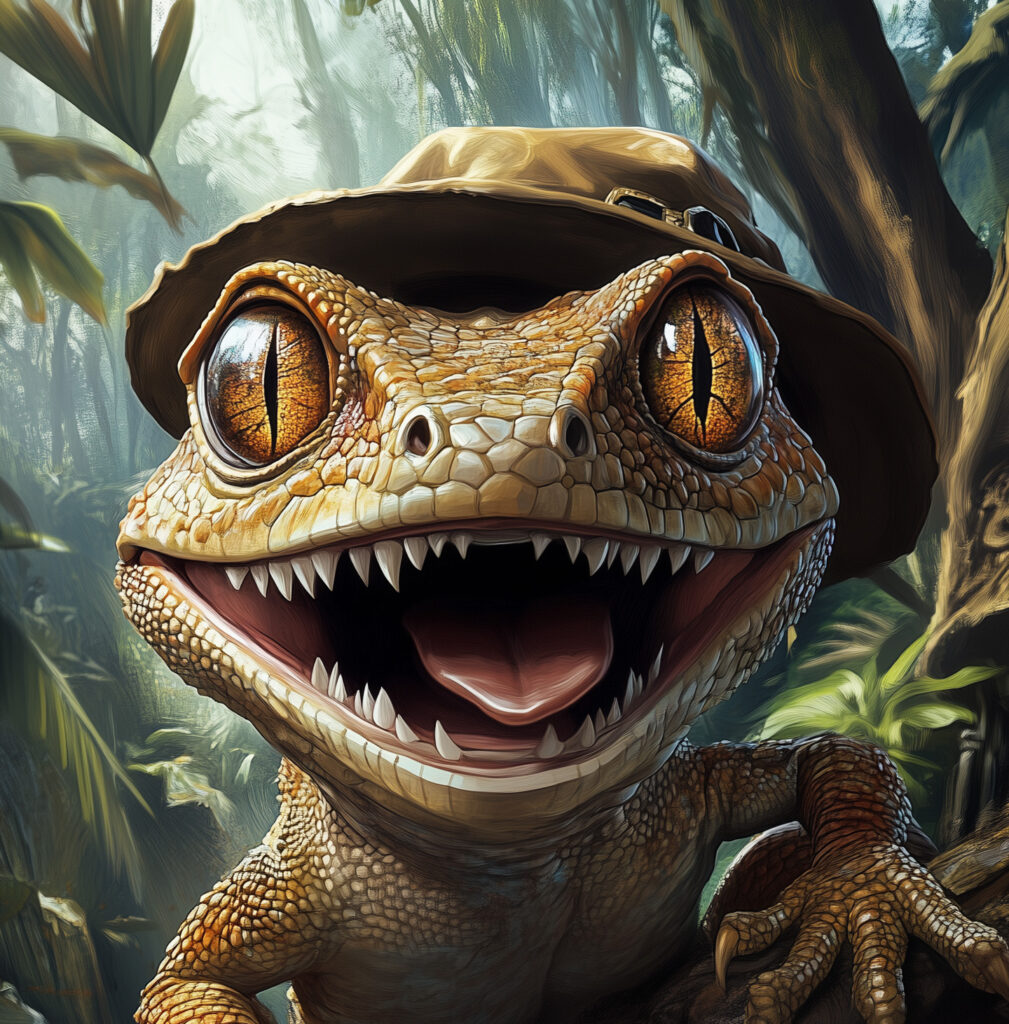
This is how he looked like after having him sent through our workflow, appearing in „Freaky Fellows“ and reflecting the Indiana Jones style theme of the Phangan jungle.
In some cases we do not have fitting own reference material or it is/was just impossible to collect it. Try to capture a demon for example… You might have your own idea of how a specific demon looks like in you mind and you can describe it with words, but very likely you will not have the chance to do a photography of this one. In this case we fully rely on basic descriptions which fit our idea best. We never use any commands or references which would specifically touch another artist’s work or artist style as our interest lies in protecting their work and style and developing our own instead like we described above.
But in rare cases you can even capture a demon! This happened to us on the island of Bali where we stayed during Nyepi, the Balinese new year. During a the new year ceremony before Nyepi, the Balinese people cast out demons in fire rituals. These demons are called Ogoh Ogoh. Here is a picture which we did over there a few years ago.
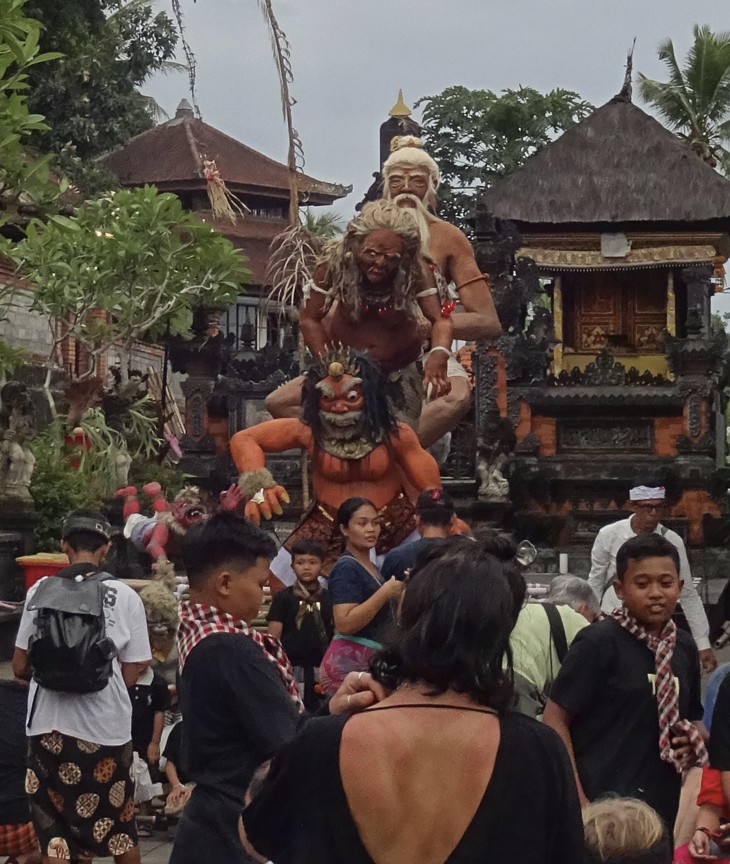
This is how these three characters appear in Wicked Weirdos, Divine Demons and Wicked Companions, of course overworked and changed in style a little.
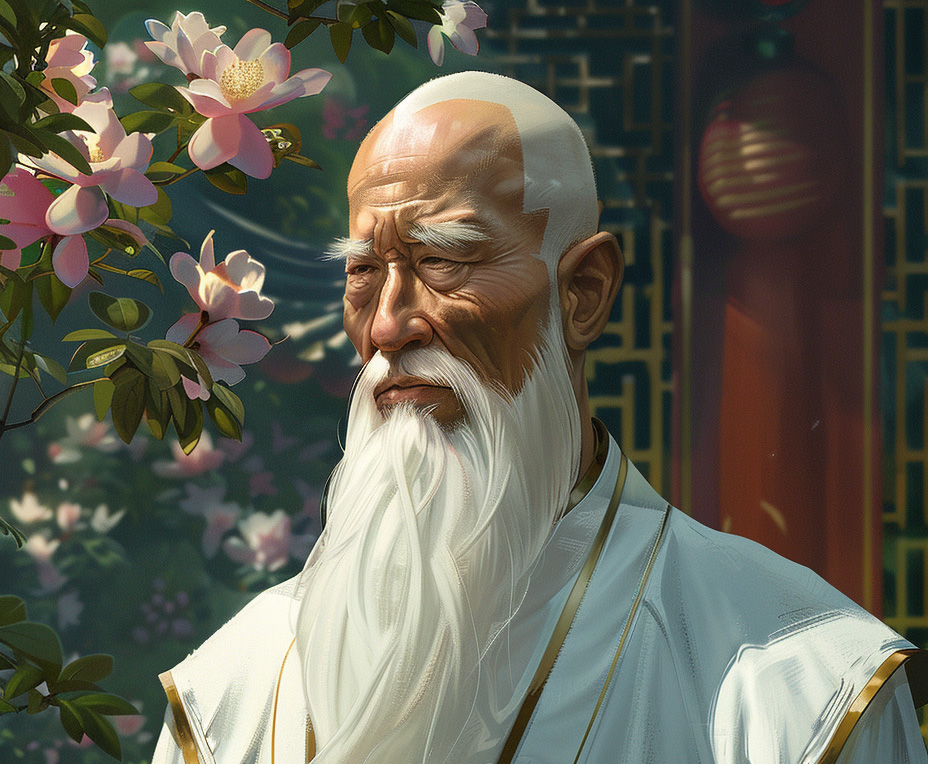
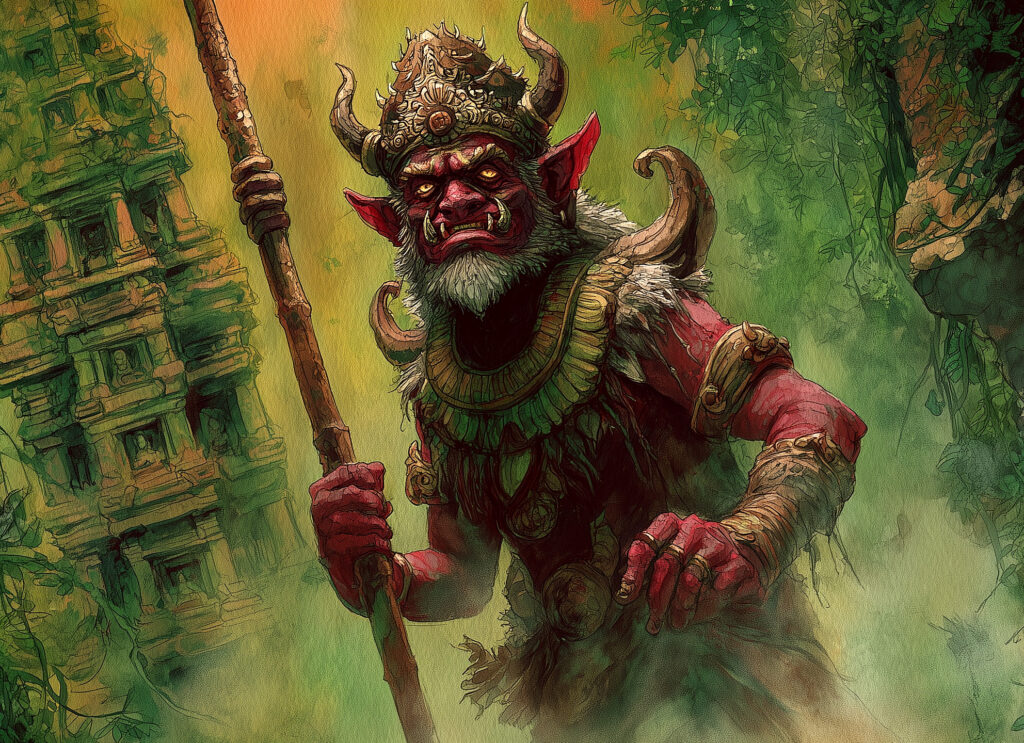
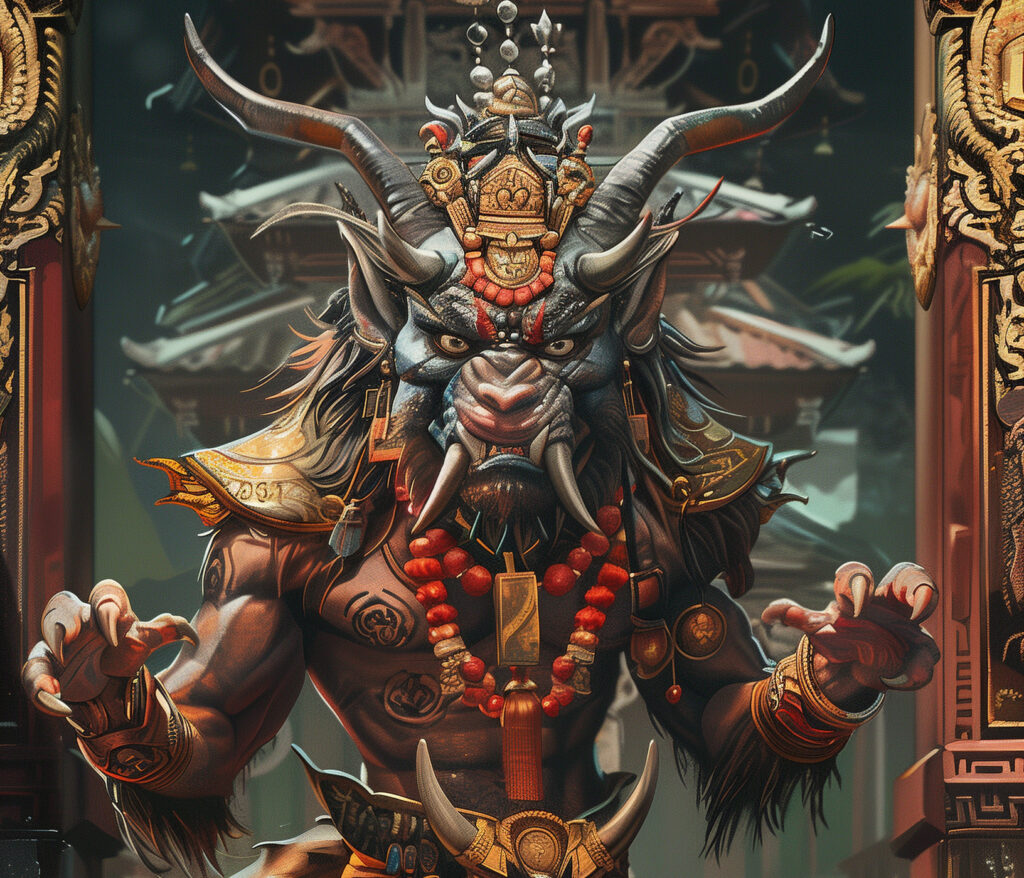
Other ways how we use AI
Like we initially said, AI is a big helper when it comes to translation. We are German and Cantonese natives, so our English is hopefully quite okay for you to read (like in this article here) – but it is more than doubtful if it would really meet publication standards. So we use AI based software to make our language flow a little smoother in our publications. In some cases we might also ask how to formulate a thought best, so what kind of vocabulary or grammar to use in certain situations and then rely on the results.
When it comes to sculpting and 3d printable terrain, then usually we do everything by hand. Most of our work is based on OpenLOCK and for the moment (April 2026) it is actually impossible to create intact and working OpenLOCK based terrain pieces fully based on AI. As an officially OpenLOCK licensed studio, we are quite happy to be working in this niche when it comes to dungeon and RPG terrain, as there is a lot of AI-based STL file creation fraud out there and we have seen fellow creators which we work quite close with becoming victims of that already. In very rare cases we speeden up the process by generating early stage blocking out shapes or assets which we then work out and detail to be used to stuff out scenery. To give you an idea about the frequency: For 230 terrain pieces in our terrain set „Underworld“, we have generated one asset which has been used in just one model after having been overworked by hand heavily. But it saved us some hours of work for an asset that was used only once upon 230 pieces to achieve a result that we desperately wanted to have for this one piece. Actually thats almost not worth to mention, but it explains where it is understandable and reasonable to use AI as a helper.
In seldom cases we use AI to help us with the mapping process. Usually we hand-create by using Inkarnate, Dungeon Alchemist or Wonderdraft. However, in some cases it is almost impossible to find fitting assets, textures or backgrounds for a certain setting. Then we use the help of AI to get as close as possible to the scene we need, which we personally find more helpful than creating something by hand that is failing the scenario.
In general we think, if it helps to bring the creation forward and makes it better, then it is better to use it instead of having inferior or unfitting results in the end. You just have to be fair and transparent.
Freelancing work
In some cases we commission parts of a publication to freelancers – such as miniatures. We are terrain sculpting experts, but need external help for miniatures. Sometimes we also ask for help regarding audio design. When doing so, we usually choose freelancers that offer handcrafted solutions and rely on their service descriptions. But of course we do not have a real insight into their workflow. Just to mention for transparency reasons.
Conclusion
Yes, we are transparently using the help of AI as a tool. And we are proud of the way we selectively use it as a tool on the way towards a final creation and what kind of results we can achieve with it. It helps us to create better final pieces, coming closer to our vision than we could without under the given circumstances discussed above. The most important thing is the fact that we use it as a tool to get selected tasks done, not to be the creator itself.
Everyone must develop their own position regarding AI, and we hope we could bring a little light into the tunnel about how we think about it and use it in the world of TTRPG game design and its challenges.
We are super thankful for your support and hope that you keep it up in the future – No matter if AI is used as a helpful tool or not for a specific task. In the end it is all about maximum fun and a great experience at the table. We do our best to guarantee that each day and this passion still makes us getting up early in the morning after all these years! Thank you that you are a part of this!
Sebastian & Mavis